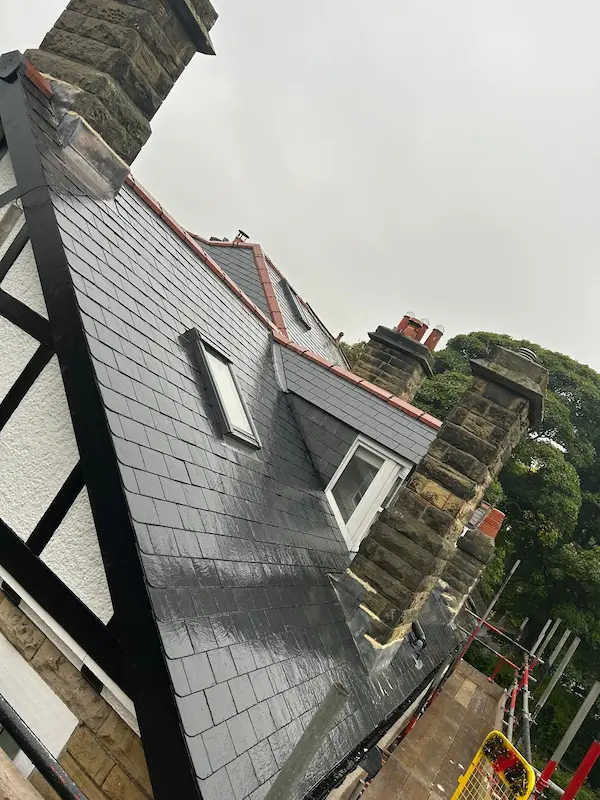
Newcastle sits in one of the most storm-exposed areas of England. According to the Met Office, the North East experiences an average of 12–15 days of gale-force winds (above 34 mph) per year — with coastal and elevated areas hit significantly harder. After named storms like Arwen (2021) and Babet (2023), VM Roofing responded to over 90 emergency calls in a single week.
The problem is that damage often builds silently. A tile shifted by 2 centimetres during a storm may not leak for months — until water finds the gap during a particularly heavy downpour. By then, the damage has spread to the timber structure beneath.
This guide covers the seven signs you can check yourself, and tells you exactly when to call a professional.
The 7 Signs of Storm Damage on Your Roof
1. Missing or Displaced Tiles
The most obvious sign. Scan the roofline from street level — any gaps in the tile pattern, or tiles sitting at an angle, suggest they've been lifted by wind uplift. On slate roofs, look for any slates that are pointing outward from the surface ("blown slates").
What to check: Walk around the full perimeter of the property. Storm damage is often localised to the windward side (usually the south-west-facing pitch in Newcastle).
2. Debris on the Roof Surface
Leaves, branches, and aerials blown onto the roof can sit unnoticed for weeks, holding moisture against the tile surface and accelerating deterioration. Check the valley sections (the joins between two roof pitches) as debris concentrates there.
3. Granules in Gutters
If you have felt flat roof sections or a pitched roof with bitumen underlay, strong wind uplift can strip the mineral granules from the surface. After a storm, check your gutters — a concentration of grit-like material indicates surface damage to an exposed section.
4. Water Stains or Wet Patches on Ceilings
Brown staining or damp patches on upper-floor ceilings are the clearest interior sign of a roof breach. Note that ceiling staining can appear several metres away from the actual entry point — water travels along rafters and joists before dripping down.
5. Daylight in the Loft
This is the fastest and most reliable post-storm check you can do without getting on the roof. It costs nothing and takes five minutes.
6. Damaged or Lifted Flashings
Lead flashings seal the joins between your roof and vertical surfaces — chimney stacks, dormer walls, and roof windows. High winds can lift or crack flashings, creating a hidden entry point that bypasses the tile surface entirely.
Look from ground level for any lead flashing that appears to be standing proud of the surface, or that has visible cracks.
7. Blocked or Overflowing Gutters
Storm winds strip moss, lichen, and small debris from the roof surface and wash it into gutters. If your gutters overflow during the first rainfall after a storm when they were clear before, storm debris is likely the cause. Blocked gutters cause water to back up under the roof edge — leading to fascia rot and, eventually, internal damp.
When to Call an Emergency Roofer
Call a professional roofer immediately (same day or within 24 hours) if you observe any of the following:
- Daylight visible through the loft ceiling or roof decking
- Active water ingress — dripping, flowing, or wet internal surfaces
- More than 3–4 tiles missing from a single section
- A chimney stack that appears displaced or leaning
- Structural timber (rafters, purlins) that appears wet or has moved
If the above conditions are not present, you have slightly more time — but still schedule an inspection within 1–2 weeks to prevent minor damage escalating.
Making an Insurance Claim for Storm Roof Damage
Most UK home insurance policies cover storm damage to the structure of the building, including the roof. To make a claim, you will typically need:
- Evidence of the storm — note the date and check Met Office records to confirm it constituted a "storm" by insurance definitions (generally winds above 34 mph, or significant rainfall)
- Photographs of the damage — taken as soon as possible after the event
- A written report from a professional roofing contractor confirming the damage is consistent with storm causation (not pre-existing wear)
- Confirmation that the roof was in reasonable condition prior to the storm
VM Roofing provides written storm damage reports specifically formatted for insurance submission. We include photographs, damage description, and a repair schedule.
What VM Roofing's Emergency Response Looks Like
- Same-day response: We aim to reach you within 4 hours for active water ingress, and within 24 hours for non-active damage
- Assessment: A qualified roofer inspects the damage and photographs it before touching anything
- Immediate weatherproofing: If the roof is exposed, we install temporary weatherproofing (tarpaulin or breathable felt) before leaving the site
- Written quote: Full written repair schedule with cost breakdown, suitable for insurance submission
- Reinstatement: Permanent repairs scheduled within 5–10 working days (subject to scaffolding requirements)
Frequently Asked Questions
What are the first signs of storm damage on a roof?
The first signs of storm damage to look for are missing or displaced tiles, visible debris on the roof, granules from felt underlay in gutters, water stains on ceilings, and daylight visible in the loft. Most storm damage is not visible from street level — you need to check from inside the loft with a torch.
Can I claim storm roof damage on my home insurance?
Yes, storm damage to a roof is generally covered under standard UK home insurance buildings policies, provided the roof was in good condition before the storm. You will need a report from a professional roofing contractor, dated photographs, and the storm date. VM Roofing provides written reports for insurance claims.
How quickly does storm roof damage need to be repaired?
Storm roof damage should be made watertight within 24–48 hours if the felt underlay or internal structure has been exposed. Exposed underlay will degrade in UV and further rainfall within weeks. Missing tiles without underlay exposure can usually wait 1–2 weeks safely but should still be scheduled promptly.
What storms commonly affect Newcastle roofs?
Newcastle and the wider North East experience Atlantic-driven storms each autumn and winter. Named storms that have caused significant roofing damage in recent years include Storm Arwen (November 2021), which caused widespread tile loss across Newcastle and Northumberland, and Storm Babet (October 2023), which caused notable damage in Gateshead and Sunderland.
How much does emergency storm roof repair cost in Newcastle?
Emergency storm roof repair in Newcastle typically costs between £150 and £600 for localised repairs (replacing a small number of tiles and resealing flashings). Larger repairs requiring scaffold or significant structural work cost more. VM Roofing provides free written quotes within 24 hours of inspection.
Need Roofing Advice?
Call VM Roofing for free expert advice — NFRC-registered, serving Newcastle, Gateshead, Sunderland and Durham.